

How to Make a Woman Squirt: 5-Step Guide from Foreplay to G-Spot Stimulation
Key takeaway: Squirting isn’t about a secret technique or a magic button. It’s about time, trust, and full-body arousal. When you slow down, build anticipation, learn her anatomy, and create an environment where she feels completely safe and unjudged, her body can respond in powerful—and sometimes surprising—ways.
Here’s the truth most guides skip: squirting doesn’t come from pressure or performance. It comes from comfort.
It happens when a woman feels relaxed enough to let go, connected enough to be vulnerable, and aroused enough that her body can move beyond control and into sensation. Think less “goal to achieve” and more “space to explore.”
Here’s the truth most guides skip: Squirting isn't about finding a magic button. It's more about creating a sanctuary where vulnerability becomes possible for your lover, where the fear of letting go dissolves into trust, and where her body feels safe enough to respond in ways she may have never experienced before. The research published in the Journal of Sexual Medicine tells us that somewhere between 10-54% of women report experiencing ejaculation during sexual activity. That wide range is a testament to how deeply personal and variable this experience is.
Before we dive into the how-to, please know that your lover not squirting doesn't mean something's wrong with her or her body. Our bodies are gloriously diverse landscapes, each with its own capacity for pleasure. The goal isn't to "achieve" squirting like checking off a box on a to do bucket list. The goal is to get playful and explore this possibility together, with curiosity and care, honouring whatever response her body offers.
What Is Squirting and Why It Happens?
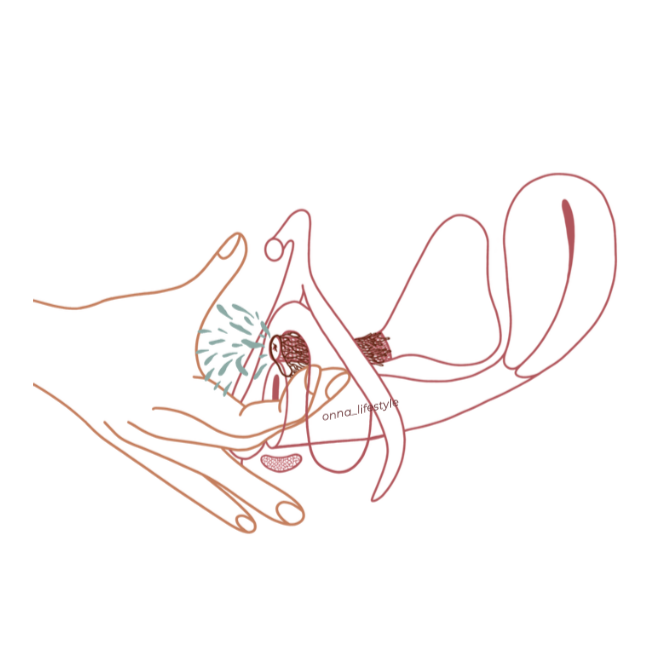
Squirting is the release of fluid from the urethra during intense arousal or orgasm, originating primarily from the female prostate (also called Skene's glands), those small but powerful glandular structures nestled in the urethral sponge. Imagine a complex network of glands, ducts, and erectile tissue all working in concert, responding to the symphony of arousal coursing through her body. These glands become engorged with blood during arousal and fill with fluid—a mixture containing prostate-specific antigen (PSA), glucose, and fructose. Research from the International Society for Sexual Medicine confirms this biochemical signature tells us that female ejaculation is a genuine phenomenon and not just an involuntary urination.
Because this fluid travels through the urethra, it often picks up trace amounts of urea and other urinary components. A 2014 ultrasound study showed that the bladder refills during stimulation and empties during squirting. So is it pee? Is it ejaculate? The truth is both and neither. It's a unique fluid produced specifically in response to sexual arousal.
This confusion causes so much unnecessary shame. I've had women tell me they stopped themselves from squirting for years because they were terrified of urinating on their partner. They'd feel that intense pressure building, that overwhelming sensation of needing to pee, and then they'd clench, hold back, shut down the very release their body was preparing to offer. That pressure isn't a warning sign—it's the signal that she's right on the edge of something extraordinary.
The amount of fluid released varies wildly and beautifully—from a few drops to enough to soak through multiple towels. There's no "right" amount—the intensity of her pleasure has nothing to do with the quantity of fluid released.
Understanding the mechanism helps dissolve this mystery. When the G-spot or rather G-zone—which is really where the female prostate meets a part of internal structure of the clitoris —receives sustained, rhythmic, focused pressure, it triggers a cascade of responses. Blood pools in the pelvic region, the erectile tissue swells dramatically, the glands of the female prostate produce ejaculate fluid, and the surrounding pubococcygeus (PC) muscles begin rhythmic contractions. At a certain threshold, these contractions can expel fluid from the glands through the urethra.
That last point deserves emphasis: squirting and orgasm are completely separate phenomena. But yes, they can happen together, creating an overwhelming combination of sensations. They can happen separately too. Some women squirt before reaching orgasm, some after, while others release and squirt during orgasm. Neither experience is superior; they're simply different expressions of sexual response.
THINGS YOU SHOULD KNOW BEFORE ATTEMTING TO MAKE HER SQUIRT
Before you embark on this journey together, you will need to build a decent foundation of honest communication, genuine trust, and a bit of practical preparation.
The Conversation That Changes Everything
Start sitting together, not in the heat of passion but in the calm clarity of intentional conversation. Talk to her. Ask her, "Are you curious about exploring squirting?" Listen carefully to her answer, paying attention not just to her words but to the hesitation or enthusiasm in her voice. Whatever she shares, meet it with curiosity and acceptance. If she's hesitant, reassure her that this exploration is optional, that her worth as a lover has nothing to do with whether she can squirt or even whether or not she wants to try.
Building Trust That Reaches Deep
For most women squirt is only possible when they feel safe enough to be utterly vulnerable. Not just physically safe, but emotionally and psychologically safe. Safe enough to make sounds that may feel embarrassing, to have her body contort in unflattering ways, to release fluid in front of you, to lose control completely. This level of trust is constructed through a thousand small demonstrations that you're worthy of her vulnerability. This happens mostly outside the bedroom in your day to day interactions and how you treat her.
Tell her explicitly: "I'm curious to explore this with you because I love experiencing pleasure with you. Whatever your body does or doesn't do, I find you incredibly sexy and our connection is what matters most." Words like these create the psychological safety that allows the body to release its protective patterns.
The Practical Preparations That Show You Care
Squirting can produce a surprising volume of fluid—anywhere from a tablespoon to several cups. Invest in a waterproof mattress protector and layer several large towels on top, or consider purchasing a sex blanket like the waterproof Splash Blanket. Set up your space before arousal begins. When she sees that you've prepared thoroughly, she receives a powerful message: "I want all of your responses. I've made space for every expression of your pleasure."
Creating Sacred, Uninterrupted Time
You need 30-60 minutes minimum of time you can be completely present. Put your phones on Do Not Disturb, lock doors, create a bubble where the outside world can't intrude. This time allowance isn't just practical, it's also symbolic. It says, "You're worth this investment. I only have time for you right now. Your pleasure deserves this space."
Managing Expectations With Compassion
Not every woman can and will squirt, and among those who can, it won't happen every time. Frame this exploration as discovery. Maybe squirting happens, maybe it doesn't, but either way, you're exploring together and learning her body's language more fluently.
Research published in The Journal of Sex Research found that women's sexual satisfaction correlates strongly with their comfort discussing sex with partners and understanding of their own anatomy. The conversations you have before, during, and after sex matter as much as the physical techniques you use.
THE FIVE STEPS TO MAKING HER SQUIRT
STEP 1: Building Arousal Through Extended Foreplay
Building arousal should focus on awakening her entire nervous system, transforming her body from a vessel of daily stress into a landscape of exquisite sensitivity.
Beginning With the Whole Landscape
Start where no one expects: her hands. Take them in yours, slowly massaging each finger, applying gentle pressure. Move to her arms, running your hands from wrists to shoulders in long, deliberate strokes. This seemingly non-sexual touch brings her out of her head and into her body, shifting her awareness from mental chatter into physical sensation.
Continue and move to full-body exploration: massage her scalp, kiss the curve of her neck, run your hands along her back, trace the curves on her legs. Every inch of her skin has nerve endings waiting to be awakened. This phase should take at least 10-15 minutes.
The Art of Approaching Without Arriving
Now begin the delicious torture of coming close but not quite, touching her most sensitive areas. Let your hands drift to her inner thighs, stopping just before you reach her vulva. Cup her breasts, circling around but not yet touching her nipples. This teasing approach makes her actively want your touch rather than passively receiving it.
Honouring the Clitoris: The Pathway to G-Spot Arousal
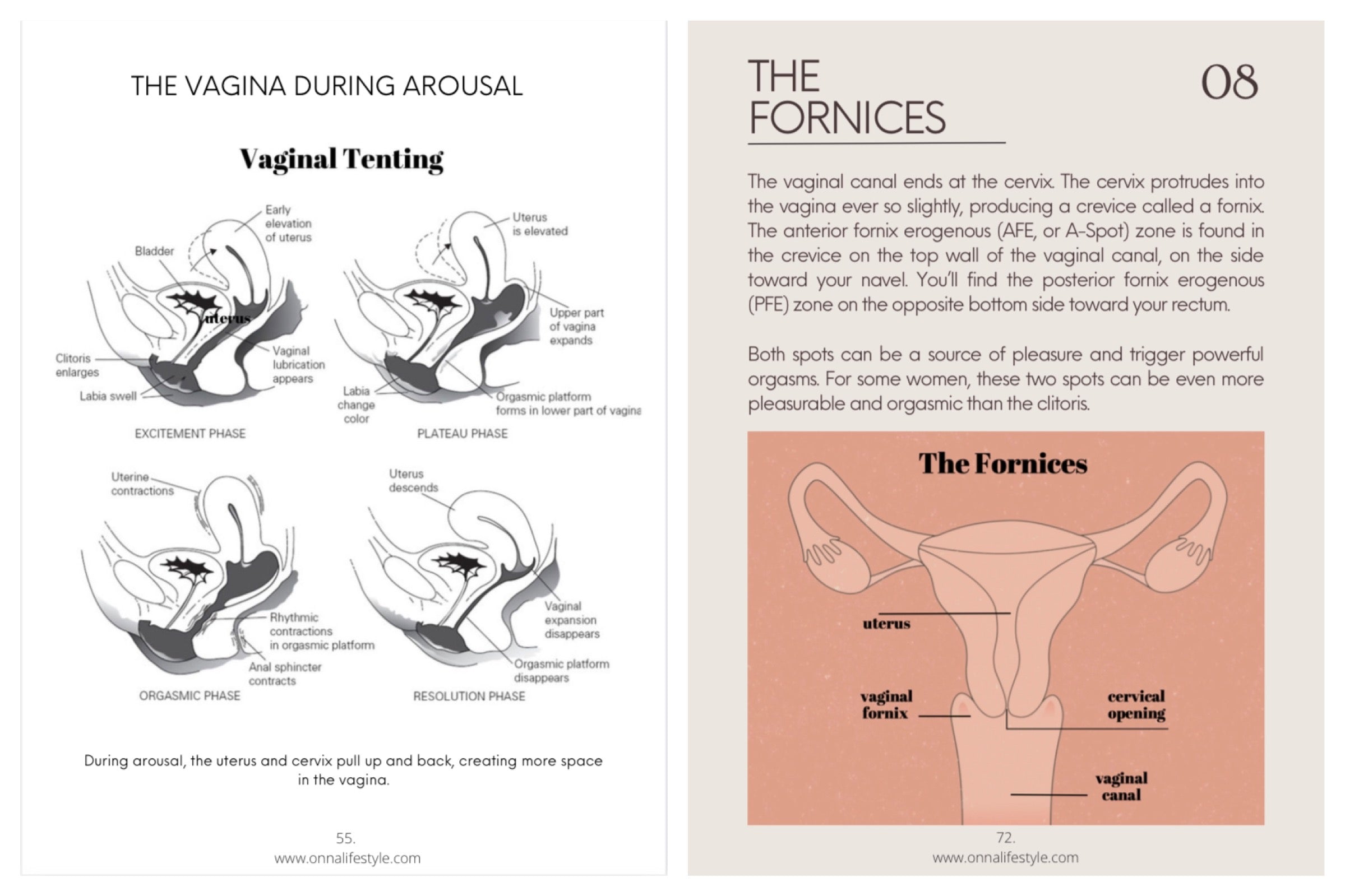
Adequate clitoral stimulation is essential for the G-spot to become pleasurably responsive. The clitoris isn't just that external pearl—it's a vast internal structure with wings (legs, or crura) extending several inches into the body and straddling both sides of the female prostate. When you stimulate the clitoris, you initiate a cascade of arousal responses throughout her entire pelvic region. Blood flow increases dramatically, engorging not just the visible clitoris but all the erectile tissue surrounding the vaginal canal.
Devote at least 10-15 minutes to clitoral stimulation before internal touch. Start gently, the clitoris contains over 10,000 nerve endings, and too much direct pressure too soon can feel overwhelming. Ask her what feels good. The best technique is the one that works for her body. Do not stay on the clitoris, you want to spread the pleasure and erotic energy into her entire pelvic region.
Creating Symphonies of Sensation
Once she's responding enthusiastically, introduce multiple points of stimulation simultaneously. Keep stimulating her clitoris with one hand while your mouth finds her breast. This multi zone stimulation creates a synergistic effect—the pleasure from each zone amplifies the others.
Vary your approach to maintain engagement. Alternate between intense and subtle, between focused and wandering. This variation keeps her nervous system actively responding rather than adapting. While all this unfolds, tell her what you're noticing: "I love watching your breathing deepen," or "The way your body responds to my touch is so beautiful."
Recognizing the Threshold
After 20-30 minutes of foreplay, watch for these signs:
- Breathing has transformed from normal to noticeably deep and fast
- Vaginal lubrication is abundant—genuine, flowing lubrication
- Clitoris is fully engorged, emerging prominently from its hood
- Lips and tissue around her vaginal opening has become darker, fuller, visibly engorged
- She seems completely immersed in sensation
- Her body makes involuntary movements toward your touch
- These signs tell you her body is ready for G-spot stimulation to feel pleasurable.
STEP 2: Locating and Stimulating the G-Spot Correctly
Finding the G-spot is like learning to read a familiar landscape in a new language, understanding the subtle topography that transforms under skilled, attentive hands.
The Geography of Her Internal Landscape
When she's fully aroused, slide one or two fingers inside her vagina with your palm facing upward. Move your fingers about two to three inches inside, curving them gently upward toward her belly button. You're feeling for a textural change—the G-spot feels slightly rougher, ridged, or bumpy, like the texture of a walnut. Every woman’s body is different. For some, the G-spot is closer to the vaginal opening, while for others it may be positioned deeper inside.
When she's not yet fully aroused, you might barely distinguish the G-spot. But as arousal builds, the area becomes increasingly prominent, swelling to sometimes twice its unaroused size. This is why adequate foreplay is non-negotiable—you're literally waiting for the tissue to transform.
The "Come Hither" Motion: Invitation to Pleasure
Once you've located the G-spot, curl your fingertips in a beckoning gesture—the classic "come hither" motion. This creates pressure against the G-spot tissue from inside while drawing the tissue toward the front of her body. Start with gentle, exploratory pressure. Think of yourself as massaging the tissue rather than thrusting.
The magic lies in its sustained contact with the G-spot. Rather than moving in and out, your fingers stay in place, pressing and releasing. This consistent contact allows stimulation to build cumulatively. As her arousal intensifies, gradually increase your pressure. Read her cues. The tissue will be literally changing under your fingers.
The Alchemy of Dual Stimulation
Once you've established a rhythm that she's responding to positively, bring your other hand or mouth to her clitoris. This combination creates a feedback loop of pleasure that's exponentially more intense than either alone. The clitoris and G-spot aren't separate systems—they're interconnected parts of the same pleasure network.
Many women report they can't squirt from G-spot stimulation alone, but the addition of clitoral touch can be what finally tips them over the edge. Rhythm is your foundation. Maintain a consistent, predictable rhythm that allows her body to synchronize with your touch. Start with a moderate pace and pressure, establishing your baseline. Keep this consistent for several minutes.
As she becomes more aroused, gradually increase both pressure and speed. The pressure that felt perfect at the beginning might feel too light ten minutes later when she's deeply aroused. The escalation should mirror her arousal.
The Sensation She Needs Permission to Feel
As stimulation intensifies, many women experience a powerful sensation of needing to go to the bathroom. This feeling is so authentic it causes many to ask you to stop. This sensation is actually the signal that the fluid is ready to be released and she's approaching squirting. The pressure on the urethral sponge creates the exact same sensation as a full bladder.
When she mentions feeling like she needs to pee, reassure her: "That's exactly what you're supposed to feel right now. That sensation means you're right on the edge. I want you to push out into that feeling instead of holding back."
What Body Position Works Best?
Her lying on her back with knees pulled toward her chest (holding them herself or propped on pillows) offers the most accessible G-spot angle for most couples. This position leverages gravity to help pool blood in her pelvic region. A firm pillow or wedge under her lower back and hips can make a significant difference.
That said, every body is different. Some women find modified doggy style creates more intense stimulation. Others prefer cowgirl variations where she sits over your hand, giving her complete control. Experiment across multiple sessions to discover what works best for her unique body.
STEP 3: Recognize When She's Close to Squirting
Reading the signs is like learning to recognize the subtle shifts before a storm—the pressure builds, and if you're paying attention, you can feel the "rain" coming.
The Erectile Tissue Speaks First
The most reliable indicator happens under your fingertips: the G-spot tissue undergoes a dramatic transformation. What started as slightly textured becomes a pronounced, firm swelling—sometimes so distinct it feels like a small fluffy balloon inflating inside her. This engorgement indicates maximum blood flow and the Skene's glands filling with fluid. While it may be subtle for some women, you will usually be able to feel the change.
Her Body Begins to Speak
Watch her muscles—they'll start contracting rhythmically around your fingers. These involuntary responses from her pelvic floor start subtle but grow stronger and more frequent. Her entire body may begin to tense. Her thighs might tremble, her toes might curl, her whole body might start shaking.
The Breath and Voice of Transformation
Her breathing—already deeper than normal—accelerates and may even become irregular. She might gasp, hold her breath, then release it in rushes. Many women become increasingly vocal—moans become louder, more urgent. Some go the opposite direction, becoming quieter but breathing heavily. Encourage her to express as vocalization can intensify her pleasure.
The Crucial Moment
If she tells you she needs to pee, or asks you to stop because she's worried she'll urinate, you've reached the critical threshold. Often, you will hear subtle sloshing or wet, rhythmic sound as fluid builds and moves naturally with each motion.Your response determines whether she releases or holds back. Tell her: "That's exactly what you should be feeling. That sensation means you're about to squirt. I want you to push into it, let it go, don't hold back."
The Convergence of All Signs
Look for multiple indicators appearing simultaneously: pronounced G-spot swelling, strong contractions, rapid irregular breathing, increased vocalizations, reports of needing to pee, and full-body tension. When you observe this constellation, maintain exactly what you're doing. Consistency at this point is sacred. The worst thing you can do is change your technique right now.
STEP 4: Techniques that Trigger the Actual Squirting Release
This is the moment everything converges—when arousal is peaking and your body becomes the instrument through which her pleasure finally, gloriously releases.
The Crescendo
When she's on that edge, intensify what you've been doing. Do not change it. Amplify it. Increase the pressure you're applying against her G-spot, pushing more firmly toward her belly button. Simultaneously increase your speed, moving to a noticeably faster, more vigorous rhythm. This intensification pushes her over the edge.
The pressure increase should be significant but not painful. Forget what you see in porn. Hammering her G-spot is not the way to go here. You want to create substantial pressure on the urethral sponge and the female prostate gland—pressure that encourages those glands to release the accumulated fluid. Check her reactions: if she's leaning into it and seems even more aroused and lost in ecstasy, you've found the right intensity.
The Words That Open the Gates
Your voice becomes a key that unlocks her body's final resistance. Tell her explicitly, with absolute confidence: "Push out. Bear down. Let it go, baby. Don't hold anything back. I want you to release."
Some find it helpful to be more explicit: "Push out like you're trying to pee. I know it feels exactly like that, and I want you to lean into that sensation." These words acknowledge what she's experiencing while giving her explicit permission to stop fighting it.
Consistency
As she starts to release, do not stop. Do not change what you're doing. Maintain the same pressure, speed, and motion that triggered the release. The squirting often comes in a couple of waves, and if you stay consistent, she may experience multiple releases over 10-30 seconds or longer. Only when she signals you to stop should you stop.
Combined Stimulation
While G-spot intensity unfolds, keep stimulating her clitoris. For many women, this dual stimulation makes the difference between approaching the edge and actually falling over it. The clitoral touch doesn't need to be as intense—often consistent, moderate pressure works best.
Keep talking to her: "You're so beautiful like this," "I love watching you let go," "That's it, give me everything." Your words anchor her in the experience.
The Moment of Release
When release, squirting happens, it can vary beautifully from woman to woman. Some experience a single, powerful gush, while others release a gentle trickle or several smaller waves. For some, it feels more like a steady, flowing release. The fluid may be clear or slightly milky, and the amount can range from minimal to abundant.
All of these responses are completely normal. Every body expresses pleasure in its own way, and there’s no “right” amount or intensity. Avoid judging the experience by volume or force—her authentic response, whatever form it takes, is exactly as it should be.
STEP 5: Support Her During and After Squirting
The moments after an intense sexual experience often reveal the deepest intimacy—not in the peak of climax, but in the quiet, vulnerable space that follows, where care, reassurance, and presence matter more than technique.
Staying Present Through the Waves
As squirting begins, resist every instinct to pull away. Continue the same pressure and motion. Only when she explicitly signals completion should you begin to decrease intensity. Even then, don't withdraw abruptly. Begin slowly reducing intensity, slow down, shift from vigorous G-spot stimulation to gentler strokes, then to softly cupping her vulva, then to simply resting your hand against her body.
The Language of Touch and Words
Stay physically close. Many women need to be held, to feel your body against theirs. Read her cues or ask directly: "What do you need right now? Do you want to be held?"
Verbal reassurance can heal years of shame. Tell her, with genuine enthusiasm:
"That was incredibly beautiful." "Thank you for trusting me enough to let go like that." "You're so sexy, so powerful in your body."
Holding Space for Her Emotions
Don't be surprised if unexpected emotions surface. Some women start crying, not from sadness but from emotional release, from the profound feeling of surrendering so completely. Others will laugh with delight. Some become very quiet. All responses are normal. Your job is to hold space for her without judgment.
Be Graceful about the Clean Up.
When it’s time to clean up, just… deal with it. Grab a towel, hand her one if she wants it, and move on. No faces, no awkward jokes. This isn’t gross—it’s literally just her body doing its thing. How you react matters more than you think; stay calm, stay present.
Afterward, small gestures go a long way. Offer her water, cuddle for a minute, or take a quick shower together if that feels good. Don’t overthink it. The point isn’t to create a “perfect moment”. The power of aftercare is just about being there, showing you care, paying attention, and letting the intensity of what just happened settle naturally.
The Communication That Deepens Connection
Once she's ready, have an open conversation. Ask open-ended questions: "How did that feel for you—not just physically but emotionally?" "Was there anything that felt particularly good, or anything you'd want me to do differently next time?"
Acknowledge the trust and courage required. Tell her: "I know how much trust it took to let yourself go like that. Thank you for being willing to explore this with me."
If she squirted abundantly, reassure her that volume doesn't matter. If she didn't squirt despite your efforts, be absolutely clear this doesn't reflect negatively on her, your skills, or your connection.
Research in Archives of Sexual Behavior found that couples who engaged in extended aftercare reported significantly higher relationship and sexual satisfaction. Aftercare isn't optional—it's integral to transforming technique into genuine intimacy.
The Real Journey Behind the Technique
There's a profound beauty in exploring the landscapes of pleasure together—in learning the language your bodies speak when given permission to be fully, messily, gloriously human.
What matters most isn't whether she squirts, or how much, or how often. What matters is that you've created a space where vulnerability becomes possible, where shame dissolves into curiosity, where her body feels safe enough to respond authentically rather than performing what she thinks you want to see.
The techniques we've shared—the extended foreplay, the G-spot location, the come hither motion, the encouragement to release—these are tools, nothing more. The real work happens in the conversations you have beforehand, in the trust you build through consistent care, in your willingness to celebrate whatever responses her body offers.
So yes, learn the female pleasure anatomy. Practice the techniques. Prepare your space thoughtfully. But never forget that the most powerful tool you bring to this exploration is your genuine presence, your authentic enthusiasm for her pleasure, and your commitment to honoring her body's wisdom above any agenda or expectation.
I've watched countless couples transform their intimate lives not by perfecting technique but by deepening their capacity to be present with each other—to witness vulnerability without judgment, to hold space for whatever emerges, to find beauty in the messy authenticity of human bodies responding to pleasure.
In the end, that's what transforms technique into intimacy: the willingness to meet each other in the vulnerable space where bodies speak truths that words never could, where release becomes possible not because the technique was perfect but because the connection was real.
Whether tonight brings squirting or simply brings you closer, whether her body responds in a dramatic or a subtle way, whether you "succeed" by conventional measures or discover entirely new definitions of success for you—what matters is that you showed up for each other. You created time for each other when time is scarce. You brought curiosity when certainty is easier. You offered acceptance when judgment is the norm.
This is the real magic. That's what will sustain your intimacy long after any single technique has been mastered and moved beyond. That's what makes sex not just pleasurable but meaningful—when it becomes a space where you practice the deepest forms of human connection: vulnerability, acceptance, presence, and unconditional care.
So go forth with knowledge, yes. But go forth with even more heart. Let technique serve connection rather than replace it. And remember: every body is different, every experience unique, and the most erotic thing you can offer isn't perfect execution but genuine presence with whatever unfolds.
FAQs
Does squirting always happen with orgasm?
No. Squirting and orgasm are separate physiological responses that sometimes coincide but often don't. Some women squirt without orgasm, others orgasm without squirting, and some experience both simultaneously.
Is the fluid released during squirting just urine?
The fluid has a distinct biochemical composition containing PSA, glucose, and fructose—compounds produced by the glands of the female prostate (paraurethral glands). Because it passes through the urethra, it may contain trace urinary components, but it's a fluid specifically produced in response to sexual arousal, not a product of urination.
Can all women learn to squirt?
Everyone born with the female prostate has the anatomy to squirt. Not all will as squirting requires specific stimulation, complete arousal, psychological safety, and willingness to release control.
How long does it typically take?
Typically 30-60 minutes total—including 20-30 minutes of foreplay followed by 10-20 minutes (sometimes longer) of focused G-spot stimulation. The key is removing time pressure entirely.
What should I do if she feels like she needs to pee and holds back?
This is the most critical moment. That sensation is actually the signal she's on the edge of squirting. Reassure her immediately: "That's exactly what you should be feeling. Push out into that feeling, bear down like you're trying to pee. Don't hold back—I want you to let go." Your calm confidence and explicit permission can override her instinctive clenching response.